


Cataract assessment and treatment planning
Cataract care begins by understanding how lens clouding affects daily life. A cataract assessment confirms the diagnosis, checks the health of the eye and supports an individual discussion about timing, lens choices and realistic visual goals.
Changes that may need cataract assessment
Blurred vision, glare and changing spectacle power can have several causes. An examination clarifies what is affecting sight.
Blurred or hazy vision
Vision may feel misty even when the spectacle prescription has been reviewed.
Glare and haloes
Headlights, sunlight or indoor lights may become increasingly uncomfortable.
Faded colour or contrast
Colours can appear dull and low-contrast tasks may become more difficult.
Frequent power changes
Repeated spectacle changes may not provide stable visual improvement.
How the consultation works
The consultation separates the cataract itself from other conditions that may also affect vision. Measurements for surgery are arranged only when treatment is being considered.
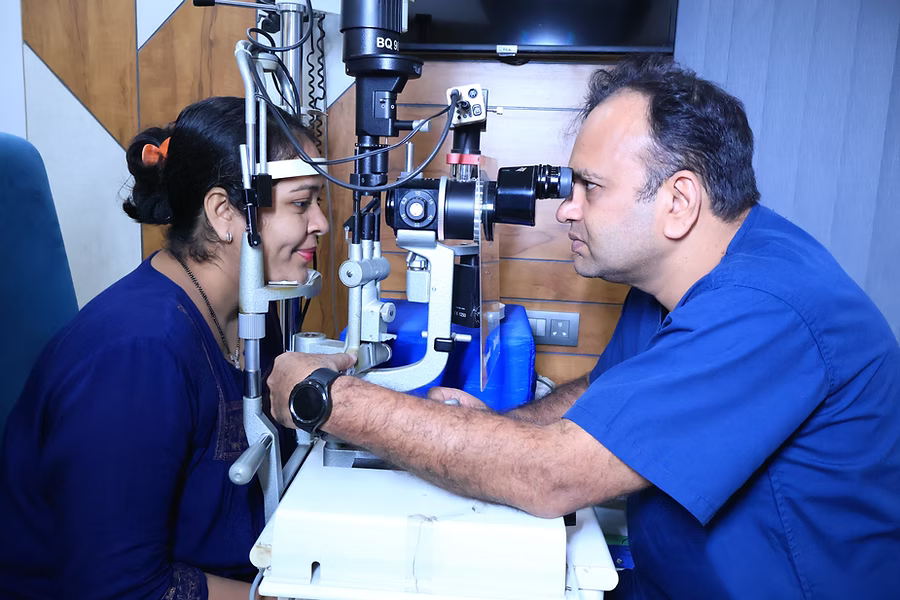
- 01
Review visual difficulty, health history and medicines.
- 02
Measure vision and examine the lens and eye structures.
- 03
Assess the retina and optic nerve where clinically possible.
- 04
Discuss timing, lens options, preparation and follow-up.
Types of IOL We Offer
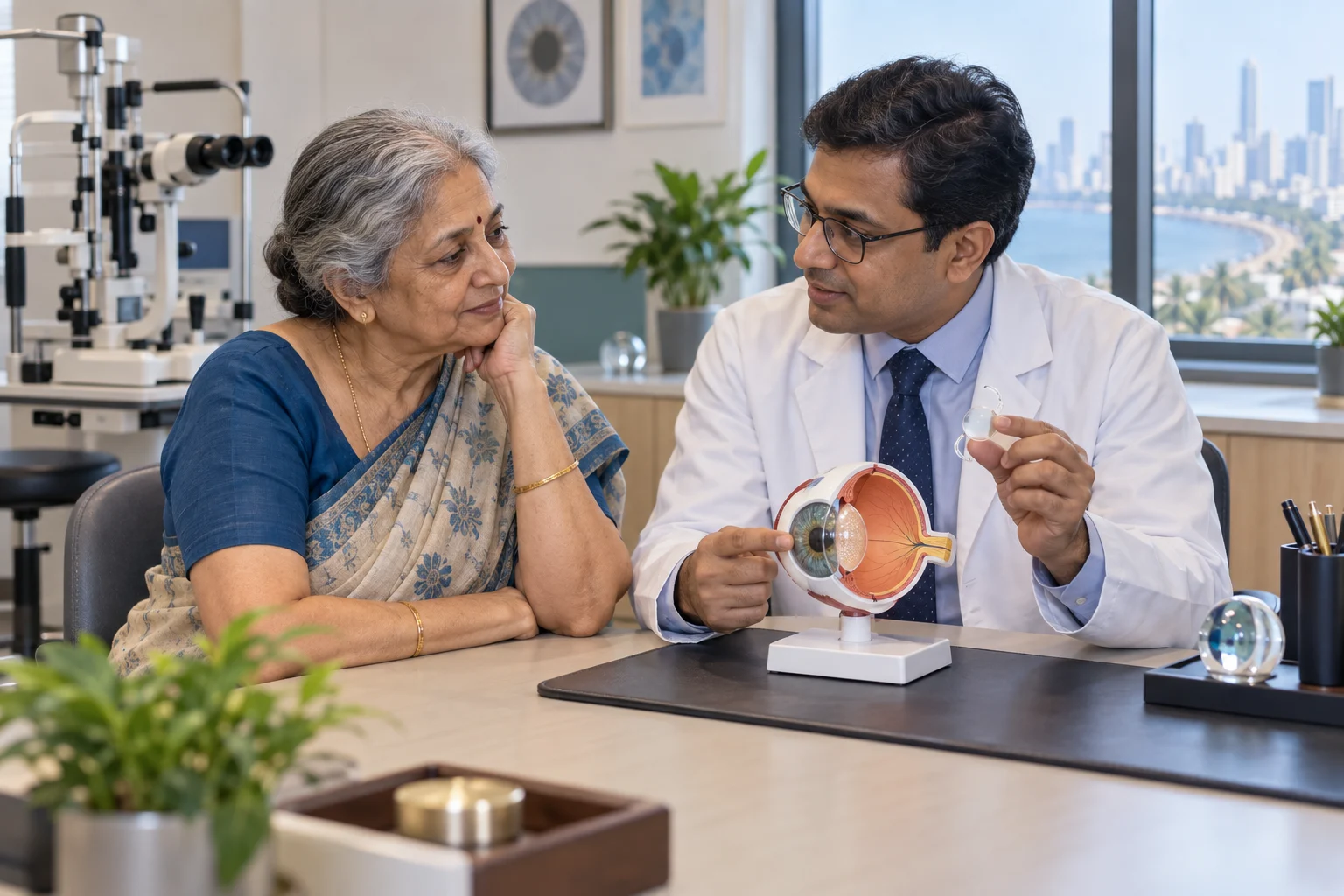
Lens selection follows eye measurements, ocular health, lifestyle and the visual priorities discussed with your surgeon.
Your Cataract Care questions
Every cataract decision follows an examination and discussion of individual visual needs.
No. Timing depends on examination findings, visual needs, safety and daily-life impact.
Eye measurements, ocular health, lifestyle and visual priorities guide the discussion.
The natural lens does not grow back, although capsule clouding can occur later.
Sudden vision loss, severe eye pain, chemical exposure or significant eye injury needs urgent in-person medical attention.
.jpeg)